About Rara and Jumla
Nepal's largest lake and the gateway to the western highlands Region
Overview
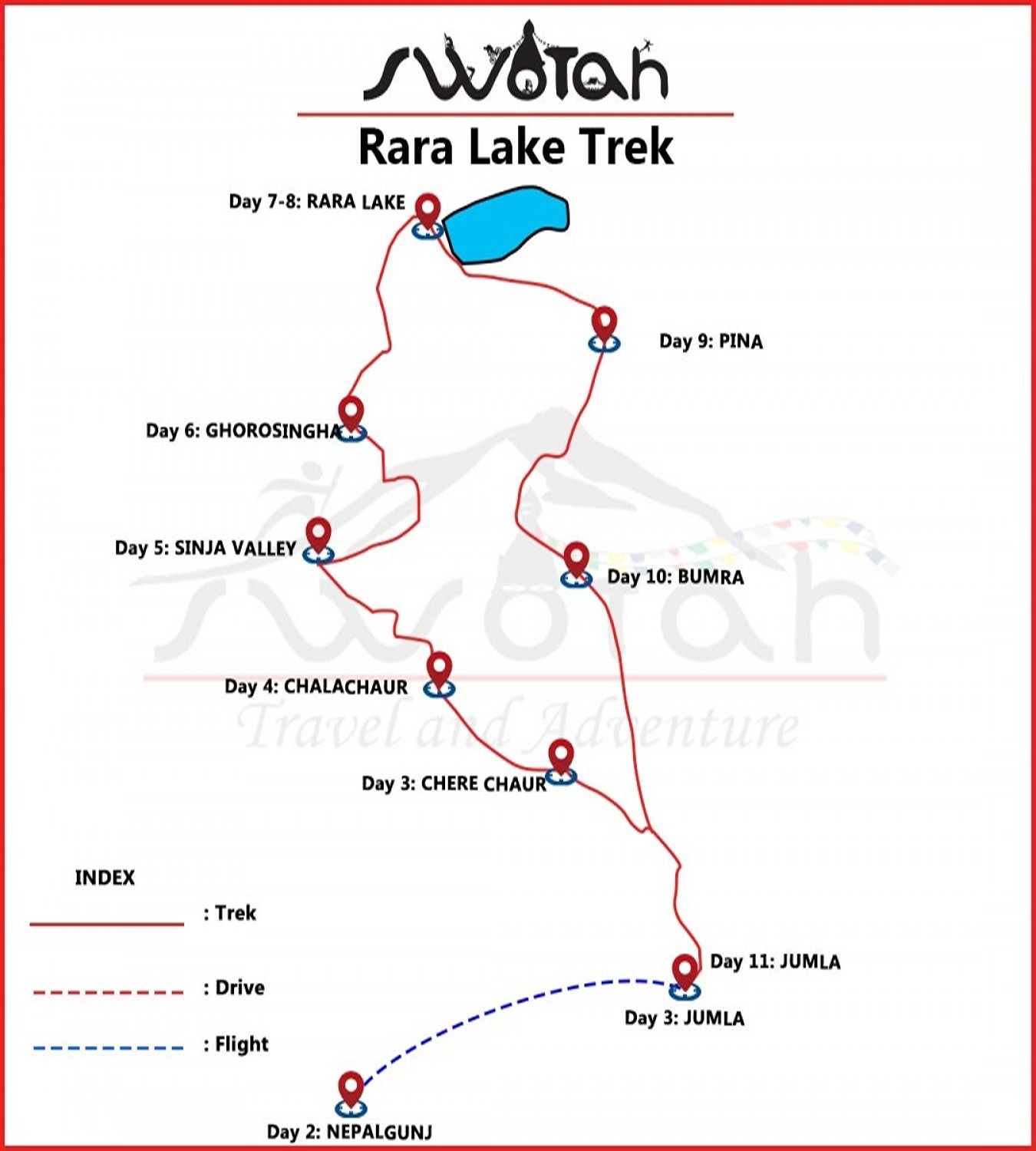
The Rara and Jumla section of the Great Himalayan Trail is centred on Rara Lake, Nepal's largest lake, set within Rara National Park in the remote Karnali hills of western Nepal. Reached via the historic highland town of Jumla, this region offers alpine scenery and highland trails far removed from the mainstream trekking circuits, with a growing but still modest number of visitors compared to central and eastern Nepal.
Geography and Landscape
The landscape is one of rolling, forested highlands and alpine pastures rather than the sheer glaciated peaks found further east, centred on the strikingly blue, high-altitude Rara Lake surrounded by dense coniferous forest. Trails connect Jumla, a historic administrative and trading centre, to Rara Lake and onward across remote passes toward Khaptad further west, passing through a mix of terraced hillsides, pine and juniper forest, and open pasture typical of Nepal's mid-western highlands.
Climate and Best Time to Trek
Spring (March–May) and autumn (September–October) offer the most favourable conditions, with clearer skies and comfortable trekking temperatures across the highland trails. The monsoon (June–September) brings rain and can make trails muddy, while winter (November–February) brings heavy snow to Rara Lake and the surrounding passes, often closing the area to trekking and cutting off road access to Jumla. Because the region sits at a generally lower average altitude than the high Himalayan circuits further east, the climate is somewhat less extreme, though still firmly continental and cold in winter.
People and Culture
Jumla and the surrounding Karnali hills are home predominantly to Hindu hill communities, including Chhetri and Thakuri families, with local customs, festivals, and agriculture shaped by the region's relative isolation from both the Kathmandu Valley and Nepal's more Tibetan-influenced northern borderlands. Traditional wooden and stone architecture, terraced barley and buckwheat fields, and local trout fishing around Rara Lake reflect a highland way of life distinct from the Sherpa and Tibetan Buddhist cultures found in Nepal's eastern and northern trekking regions.